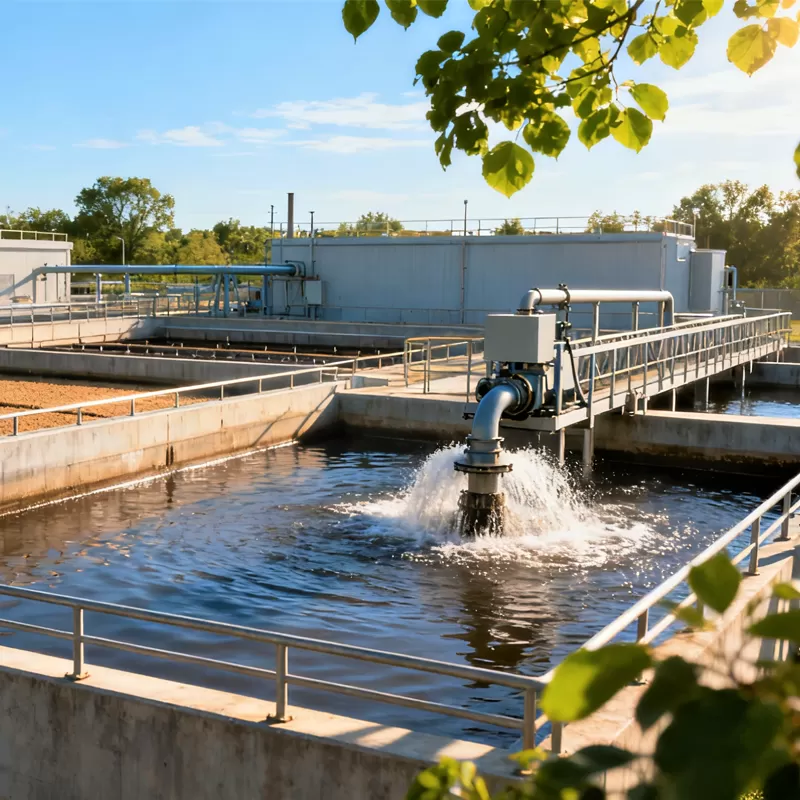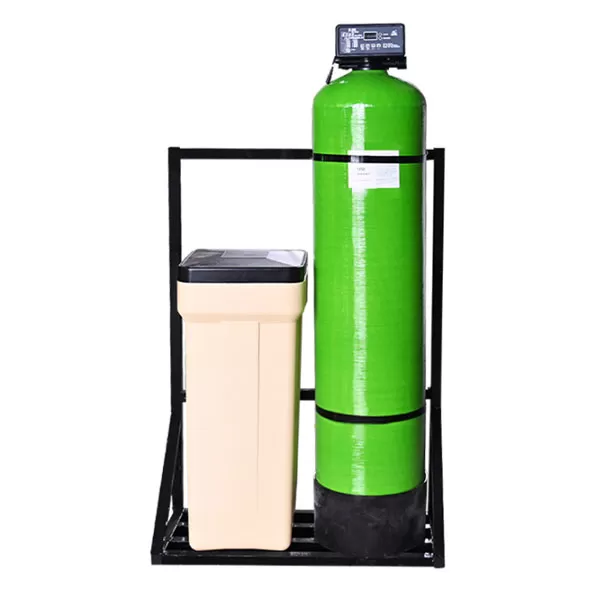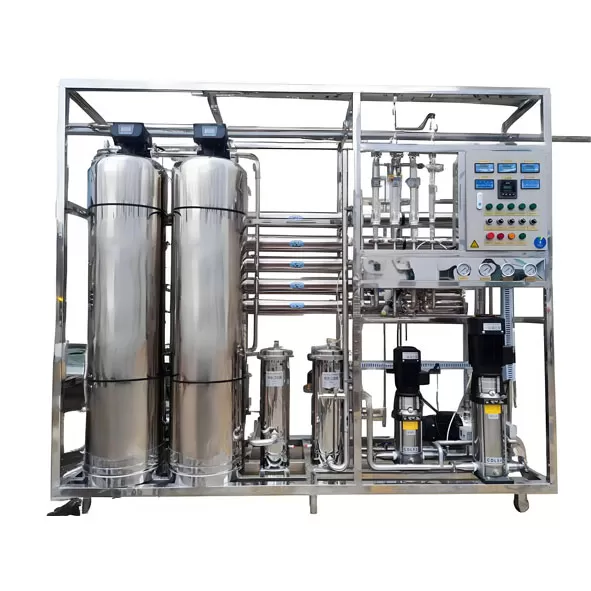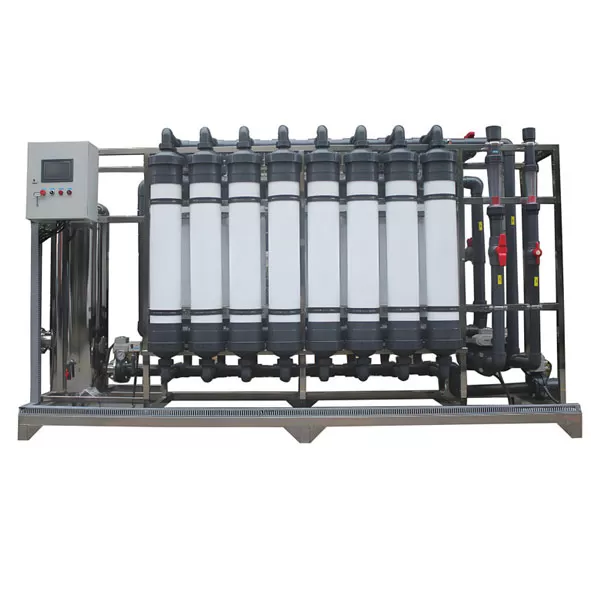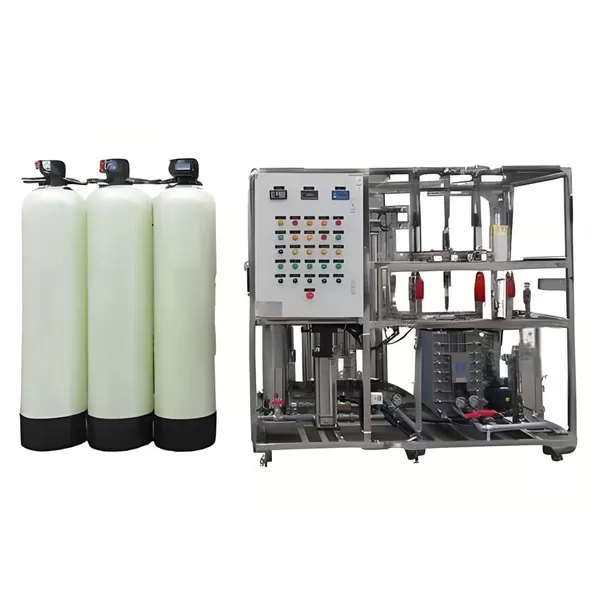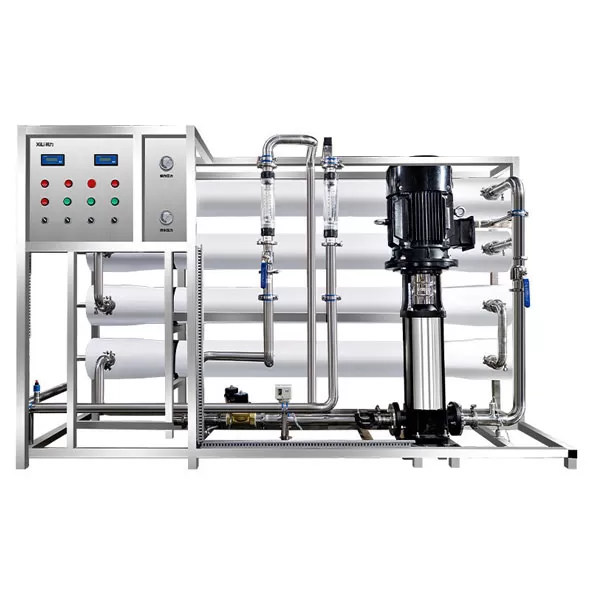
Choosing the right water filtration treatment is ultimately a cost-and-performance decision: what contaminants must be removed, what water quality is required at the point of use, and what your plant can afford in energy, chemicals, and downtime. In many industrial applications, an NF system (nanofiltration) can deliver the right level of desalting and organic removal at lower pressure than RO — while RO remains the standard for high-purity or near-total TDS reduction. This guide compares NF and RO using a practical, procurement-friendly framework.
Both nanofiltration and reverse osmosis are pressure-driven membrane processes. The distinction is in the pore size (or more precisely, the rejection characteristics) of the membrane — and that distinction drives the entire cost-performance comparison.
| Separation Characteristic | NF System | Reverse Osmosis |
|---|---|---|
| Multivalent ion rejection (Ca²⁺, Mg²⁺, SO₄²⁻) | High — 85–98% typical | Very high — 95–99% |
| Monovalent ion rejection (Na⁺, Cl⁻, K⁺) | Moderate — 20–70% depending on membrane | High — 90–99% |
| Organic molecules and color | Good — removes natural organic matter, color, micro-pollutants | Good to excellent |
| Dissolved gases (CO₂) | Not removed | Not removed |
| Bacteria and viruses | Rejected by size | Rejected by size |
| Typical operating pressure | 3–10 bar | 10–70 bar (brackish to seawater) |
Before comparing NF and RO, define what you actually need to remove. Many industrial plants over-specify and pay for RO performance when NF would meet the process water requirement. The key inputs:
Complete feedwater analysis (ions, TDS, hardness, organics, turbidity)
Required permeate quality (conductivity, hardness, TDS, specific ion limits)
Regulatory discharge limits for the concentrate stream
If the requirement is hardness reduction, sulfate removal, or partial TDS reduction — NF nanofiltration is often sufficient. If the requirement is conductivity below 10 µS/cm or near-zero TDS — RO is the correct specification.
| Cost Factor | NF System | RO System |
|---|---|---|
| Feed pressure requirement | 3–10 bar | 10–70 bar — depends on TDS and recovery target |
| Specific energy consumption | Lower — typically 0.5–1.5 kWh/m³ | Higher — 1.5–5 kWh/m³ for brackish; higher for seawater |
| Membrane cost | Lower unit cost typically | Higher — particularly for high-rejection membranes |
| Chemical cleaning frequency | Depends on feedwater; generally moderate | Higher — more sensitive to scaling and fouling at higher pressure |
| Concentrate disposal | Lower concentration typically | Higher TDS concentrate — may require further treatment |
Recovery rate — the percentage of feed water that becomes product water — directly affects both energy consumption and concentrate handling cost.
A system running at 75% recovery produces 25% concentrate that must be handled. For a plant with limited discharge options, maximizing recovery reduces disposal cost but increases scaling risk, requiring more aggressive scale inhibitor dosing and potentially more frequent chemical cleaning.
NF nanofiltration systems typically achieve 75–90% recovery with manageable scaling risk on moderately hard water. RO systems at equivalent recovery require more careful scale management because the concentrate is more concentrated and scaling ions approach saturation more rapidly.
| Application | Why NF Fits | Benefit vs. RO |
|---|---|---|
| Boiler makeup hardness reduction | Removes Ca²⁺ and Mg²⁺ to protect boiler surfaces | Lower operating pressure and energy; adequate hardness rejection |
| Cooling tower makeup | Removes hardness and sulfate to reduce scale and corrosion | Cost-effective for partial TDS reduction targets |
| Process water for non-critical applications | Partial TDS reduction where ultra-purity is not needed | Significant energy saving versus RO for the same flow rate |
| Color and organics removal for industrial reuse | NF removes natural organic matter and color effectively | Often sufficient without the cost of full RO |
| Wastewater recovery with moderate TDS target | Partial desalting for reuse in non-critical circuits | Lower cost per cubic meter of recovered water |
For a plant requiring 100 m³/hour of treated water:
RO at 15 bar and 80% recovery: approximately 4.5 kWh/m³ energy demand
NF at 6 bar and 80% recovery: approximately 1.8 kWh/m³ energy demand
Energy saving: 2.7 kWh/m³ × 100 m³/hour × 8,000 operating hours/year = 2,160,000 kWh/year
At USD 0.10/kWh, this represents USD 216,000 per year in energy savings — and NF nanofiltration meets the specification for hardness and partial TDS reduction in this scenario.
| Requirement | Why RO Is Needed | NF Limitation |
|---|---|---|
| Conductivity below 50 µS/cm | High monovalent salt rejection required | NF allows significant Na⁺ and Cl⁻ passage |
| Boiler feedwater for high-pressure steam | Very low TDS and silica | NF does not adequately reject silica and monovalent ions |
| Pharmaceutical process water | Ultra-pure specification with regulatory compliance | NF does not meet USP Purified Water conductivity specs |
| Electronics or semiconductor rinsing | Ultrapure or near-ultrapure water | NF rejection insufficient |
| High-TDS feedwater desalination | Significant salinity reduction required | NF cannot achieve the rejection needed |
For plants that need high-purity RO product water from a challenging feedwater source, NF as a pretreatment step before RO can be cost-effective:
NF removes hardness and sulfate, reducing RO scaling risk
Lower hardness in the RO feed allows higher RO recovery without scaling
RO membranes last longer and require less frequent chemical cleaning
Overall system energy consumption can be lower than a single-stage RO at high recovery
This hybrid approach is particularly relevant for high-hardness surface water or groundwater sources where direct RO at high recovery would require aggressive chemical dosing.
| Data Item | Format | Why Required |
|---|---|---|
| Feedwater analysis | Ion-by-ion report (Ca, Mg, Na, Cl, SO₄, alkalinity, TDS, pH, temperature) | Mass balance and scaling index calculation |
| Required flow rate | m³/hour or m³/day of permeate | Membrane area and pump sizing |
| Target permeate quality | Conductivity, hardness, specific ions in mg/L | Rejection specification selection |
| Recovery target | Percentage of feed water as product | Concentrate volume and scaling risk |
| Operating temperature | Min and max seasonal water temperature | Flux correction and membrane selection |
| Available power supply | Voltage and phase | Pump motor specification |
| Discharge limits | Maximum concentrate TDS or volume | Recovery constraint |
Mass balance confirming feed, permeate, and concentrate flows and quality at design conditions
Specific energy estimate at the design operating point
Membrane brand, model, and area specification — not generic "NF membrane"
Chemical cleaning (CIP) plan including frequency, chemical type, and waste handling
Instrumentation list with flow meters, pressure transmitters, conductivity sensors, and alarms
For variable feedwater quality (surface water, mixed sources), request a pilot skid trial before committing to full system design
Define acceptance criteria for the commissioning period: permeate conductivity, flow rate at design pressure, recovery rate, and chemical cleaning interval
Confirm the supplier's performance guarantee — not just equipment warranty
The most cost-effective water filtration treatment is the one that meets your specification with the least total operating burden. If your goal is hardness and multivalent ion reduction or partial desalting, an NF system frequently offers strong ROI with lower pressure and significantly lower energy demand than RO. If you need very low TDS, pharmaceutical-grade purity, or high-pressure desalination, RO is the correct investment even at higher operating cost. Define your specification precisely, compare both technologies against actual operating cost over a 10-year horizon, and pilot before committing to full scale.
Q1: What is the main difference between an NF system and reverse osmosis?
NF membranes have larger effective pore sizes than RO and reject multivalent ions (hardness, sulfate) at high rates while allowing a significant fraction of monovalent salts (sodium, chloride) to pass. RO rejects nearly all dissolved salts regardless of valence. The practical result is that NF produces partially desalted water at lower pressure and cost, while RO produces high-purity water at higher energy cost.
Q2: Which is more cost-effective for industrial water treatment — NF or RO?
It depends entirely on the required product water specification. If you need hardness removal, color reduction, or partial TDS reduction (conductivity above 100–200 µS/cm), NF is typically more cost-effective due to lower operating pressure and energy. If you need very low conductivity, near-zero TDS, or pharmaceutical-grade water, RO is justified despite the higher cost.
Q3: Does nanofiltration effectively reduce water hardness?
Yes — NF membranes reject calcium and magnesium at 85–98% efficiency, making NF an effective and energy-efficient solution for hardness reduction before boilers, cooling systems, and other scale-sensitive equipment. It also rejects sulfate at similar rates, which reduces corrosion risk in cooling water circuits.
Q4: What pretreatment do NF and RO systems require?
Both technologies require feedwater pretreatment to protect membranes from physical damage and fouling. Typical pretreatment includes multimedia or cartridge filtration to remove suspended solids, pH adjustment if needed, and scale inhibitor dosing to prevent calcium carbonate or sulfate scaling on the membrane surface. RO generally requires more comprehensive pretreatment than NF due to higher operating pressure and lower tolerance for fouling.
Q5: What information is needed to get an accurate NF or RO system quotation?
A complete feedwater analysis showing all major ions (calcium, magnesium, sodium, chloride, sulfate, alkalinity), pH, TDS, and temperature is the most important input. Also provide required permeate flow rate, target permeate quality (conductivity, hardness, specific ion limits), desired recovery rate, operating temperature range, available power supply, and any constraints on concentrate disposal or discharge.